Noise-Induced Hearing Loss: Causes, Prevention & Treatment
July 16, 2026 · By Hearing Comforts Clinical Team · 5 min read
Noise-induced hearing loss (NIHL) is one of the most common — and most preventable — causes of hearing damage. Unlike age-related hearing loss, it's caused by exposure to loud sound, and the damage is usually permanent.
Helpful next steps
What Counts as "Too Loud"?
Sound above 85 decibels (dB) can begin to damage hearing with prolonged exposure — that's roughly the level of heavy city traffic. Concerts, construction sites, factory floors and even long hours with headphones at high volume can regularly exceed 100 dB.
Common Sources in Everyday Life
- Daily commuting through heavy traffic or on a two-wheeler without ear protection
- Listening to music at high volume through earphones for extended periods
- Working in construction, manufacturing or industrial settings without hearing protection
- Attending loud concerts, festivals or fireworks displays
- Using power tools or lawn equipment regularly without ear protection
How to Protect Your Hearing
- Follow the 60/60 rule with headphones — no more than 60% volume for 60 minutes at a stretch
- Wear proper earplugs or earmuffs in loud work environments
- Give your ears recovery time after loud events — 16–18 hours of quiet after a loud concert, for example
- Get a baseline hearing test if you work in a consistently noisy environment, and repeat it annually
When to Get Tested
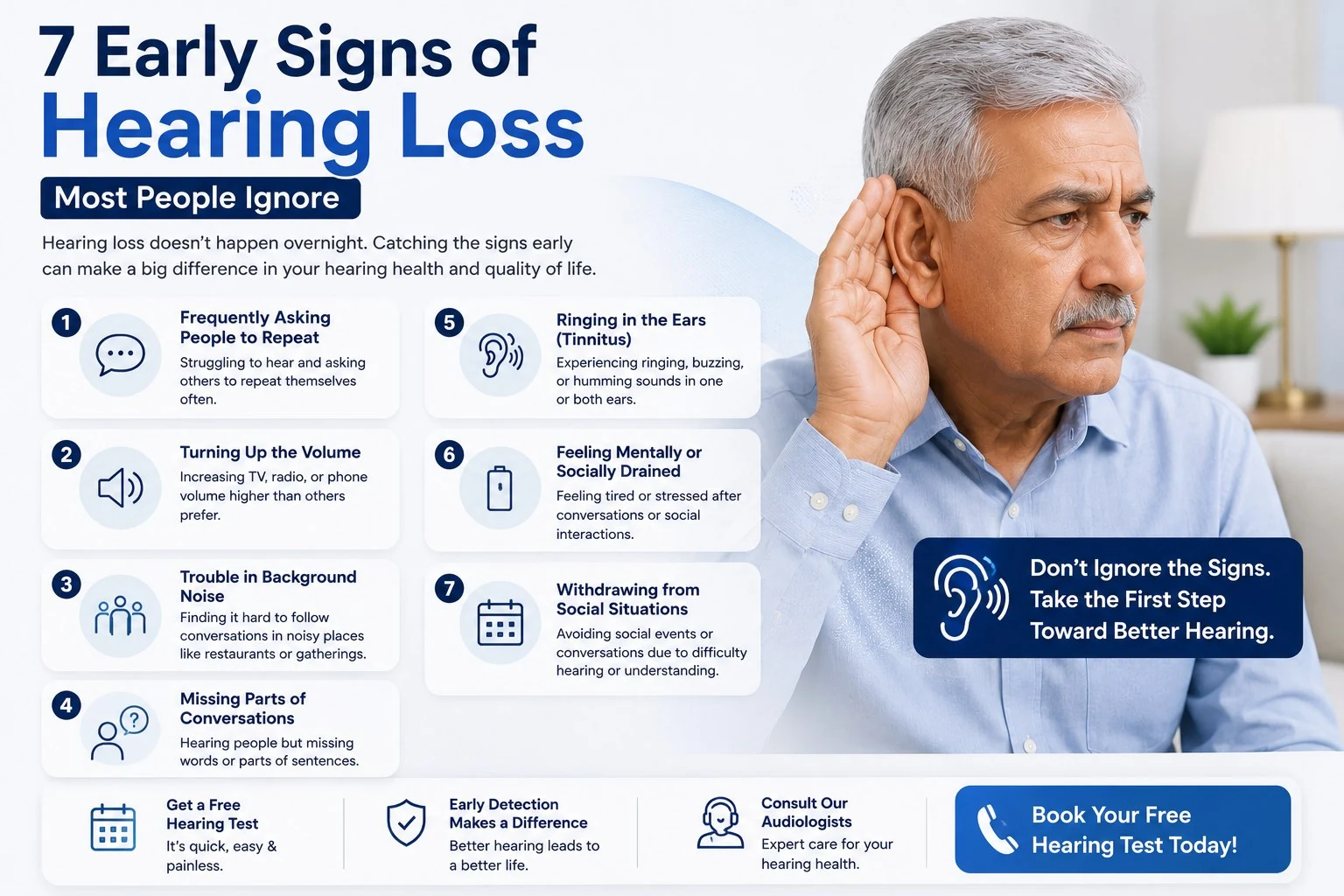
If you notice ringing in your ears after loud exposure, muffled hearing that doesn't fully recover, or you find yourself asking people to repeat themselves more often, it's worth booking a free hearing test to check for early noise-related damage.
Frequently Asked Questions
Can noise-induced hearing loss be reversed?
In most cases, no — noise-induced hearing loss involves permanent damage to the tiny hair cells in the inner ear. This makes prevention and early detection especially important.
Is it normal for ears to ring after a loud concert?
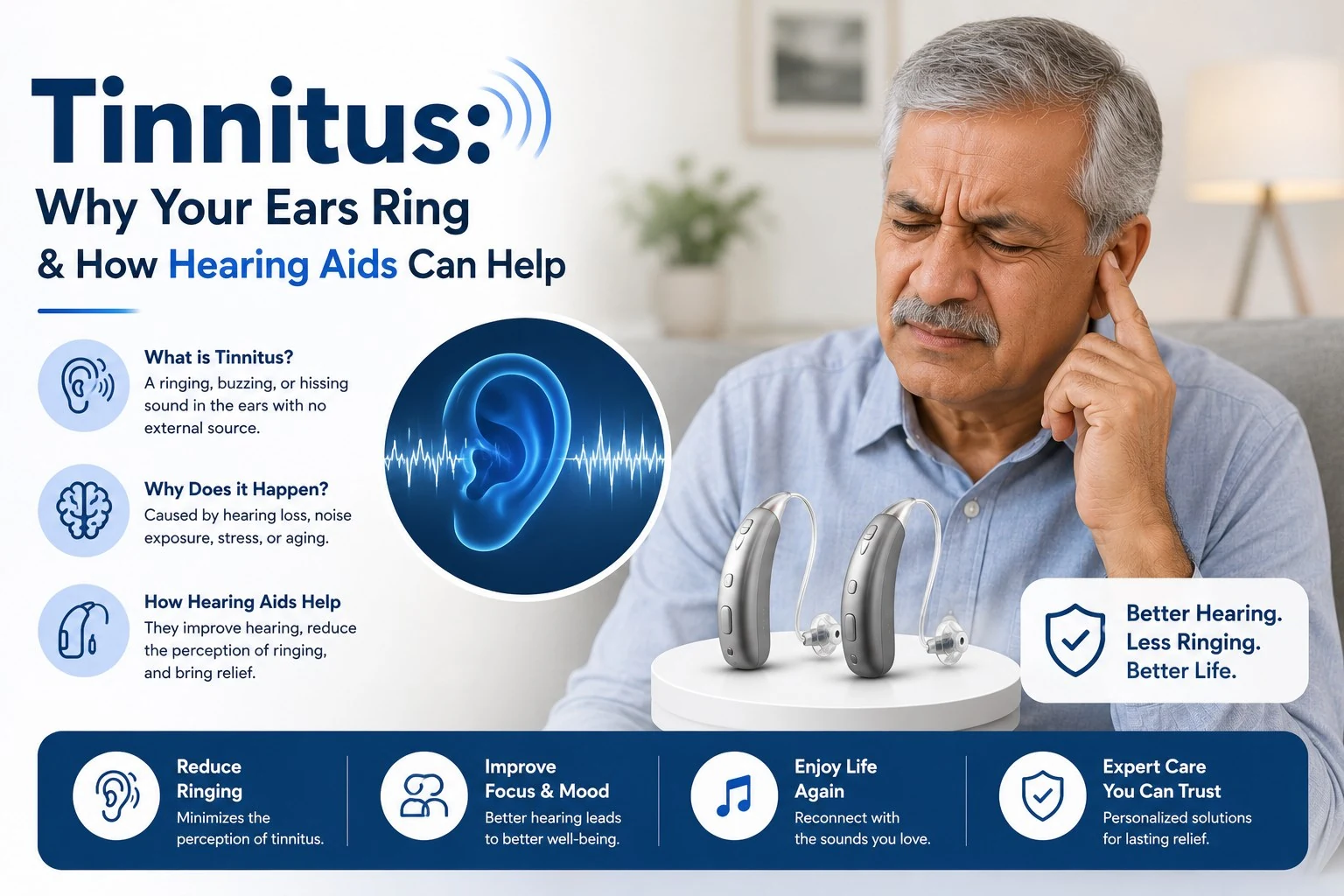
Temporary ringing (tinnitus) after loud noise exposure is common, but if it persists beyond a day or two, it's worth getting your hearing checked.
Still have questions about your hearing?
Book a free hearing test with our certified audiologists.