Hearing Loss and Dementia: What Every Family Should Know
July 14, 2026 · By Hearing Comforts Clinical Team · 5 min read
A growing body of research has found a link between untreated hearing loss and an increased risk of cognitive decline in older adults. While hearing loss doesn't cause dementia directly, the connection is significant enough that major health bodies now flag hearing care as part of brain health.
Helpful next steps
Why the Connection Exists
Researchers point to a few likely explanations: the brain has to work much harder to process degraded sound, leaving fewer cognitive resources for memory and thinking; untreated hearing loss often leads to social withdrawal, and reduced social engagement is itself a known risk factor for cognitive decline; and some shared underlying biological changes may affect both hearing and brain health.
The Encouraging Part
Several long-term studies have found that people who use hearing aids for hearing loss show a slower rate of cognitive decline compared to those with untreated hearing loss — making treatment a meaningful, actionable step families can take.
What Families Can Do
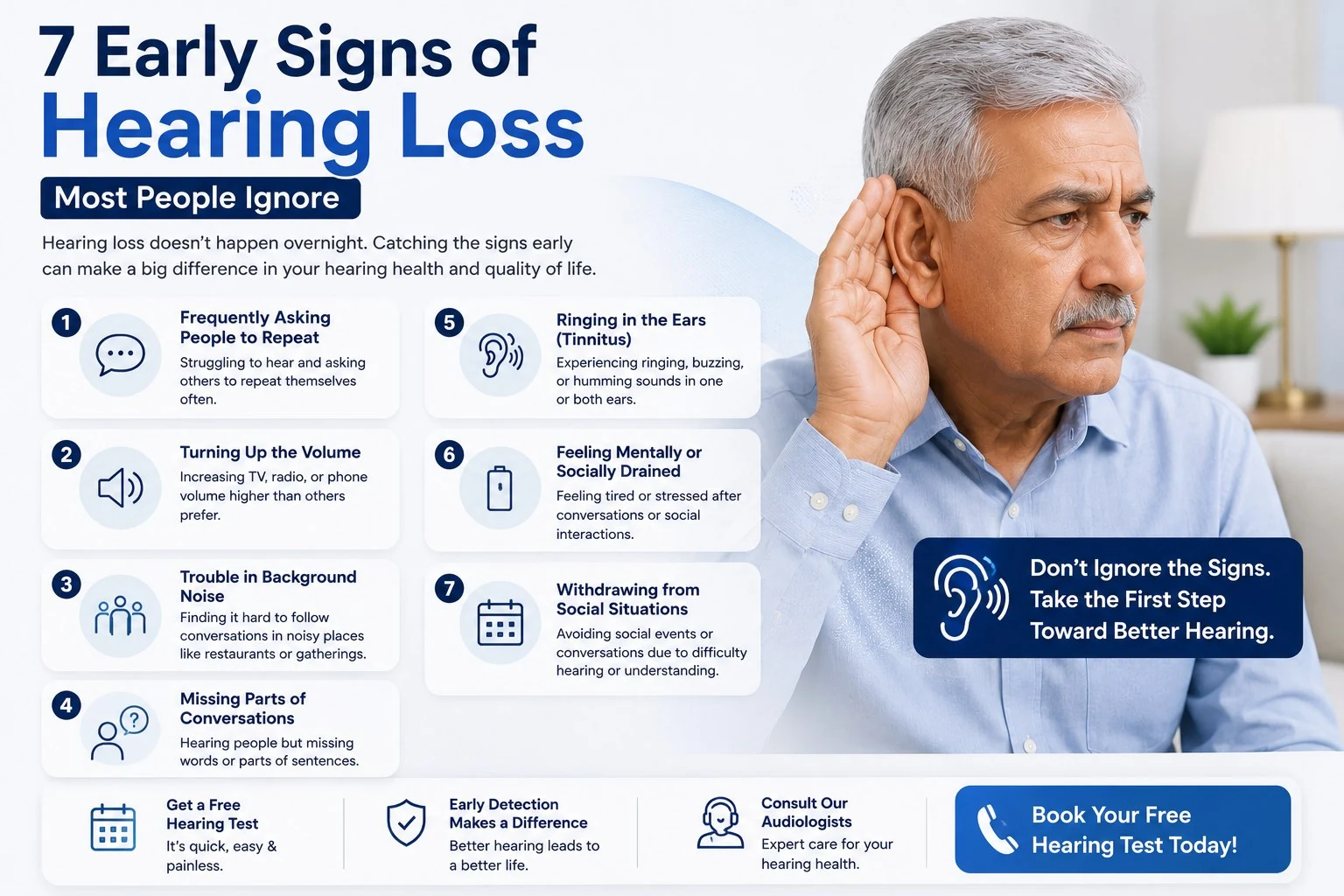
- Don't dismiss "I hear fine" from an older family member — encourage a free hearing test
- Watch for withdrawal from conversations or family gatherings, which can be an early sign
- If hearing aids are recommended, support consistent daily use — the benefit comes from regular wear, not occasional use
- Schedule regular hearing check-ups as part of routine health care, just like eyesight
Protecting hearing early is one of the simplest, most overlooked ways to support long-term brain health in the people you love.
Still have questions about your hearing?
Book a free hearing test with our certified audiologists.