Best Hearing Aid for Elderly: How to Choose the Right One
September 5, 2026 · By Hearing Comforts Clinical Team · 8 min read
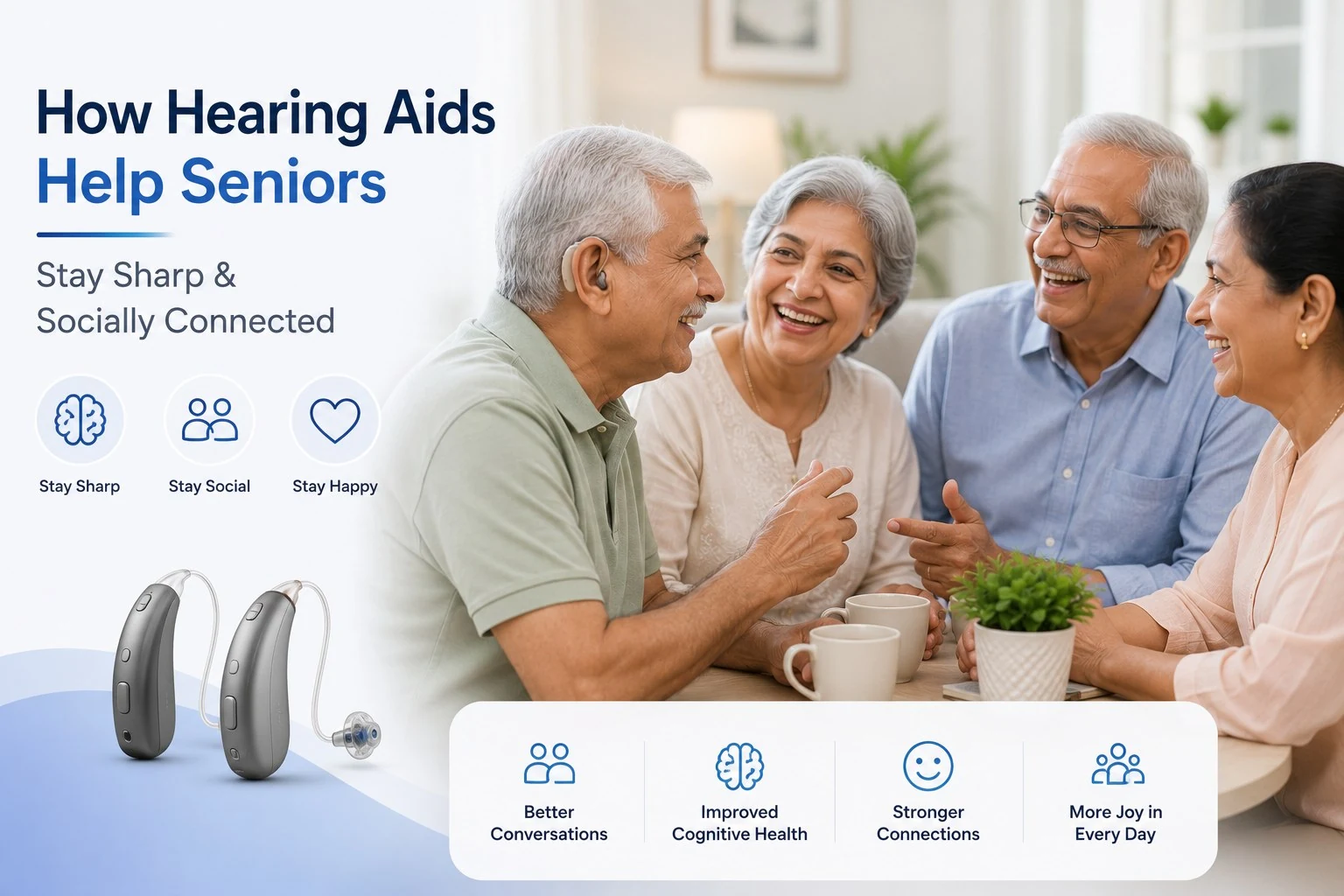
Choosing the best hearing aid for elderly family members is less about finding the smallest or most expensive device and more about finding one they can comfortably wear, manage and use every day. Hearing loss, dexterity, vision, lifestyle and listening environments all matter.
Helpful next steps
Book a Free Hearing Test → · Read Our Senior Hearing Care Guide → · Explore RIC Hearing Aids →
In this guide
Start with a hearing test
The first step is understanding the hearing loss in each ear. A professional hearing evaluation helps identify the degree and pattern of hearing loss and provides a basis for hearing aid selection and programming.
If conversations are difficult even in quiet settings, or if there are ear symptoms such as pain, drainage or sudden changes in hearing, seek appropriate medical or hearing-care advice rather than simply buying an amplifier.
What makes a hearing aid easier for seniors?
Ease of handling is important. Look for a device that the wearer can insert, remove, charge or use with minimal frustration. Simple controls, a practical charger and clear instructions can make a major difference to daily use.
For someone with limited dexterity, a rechargeable hearing aid may be convenient because it removes the need to frequently handle tiny disposable batteries. The right choice still depends on the person's preferences and model availability.
BTE, RIC or custom hearing aids?
BTE and RIC hearing aids are commonly considered because they can combine useful power with manageable handling. Custom in-ear styles can be attractive when discretion is important, but very small devices may be harder for some seniors to insert and remove.
The best style depends on the audiogram, ear anatomy, comfort and the user's ability to handle the device. Smaller is not automatically better.
Features that can be useful for elderly users
- Rechargeable power for easier daily routines.
- Good speech-focused processing for conversations.
- Simple controls or app support when the user is comfortable with technology.
- Bluetooth connectivity for compatible phones or accessories when useful.
- Reliable fitting, cleaning and follow-up support.
Family support can improve success
Family members can help by attending the fitting, learning how the device is charged and cleaned, and encouraging regular use. It also helps to tell the audiologist about the situations where the senior struggles most, such as television, family gatherings, religious settings or phone calls.
The best hearing aid is the one that gets used
A hearing aid only helps when it is worn consistently and fitted appropriately. Comfort, handling and realistic expectations are therefore as important as technology. Give the user time to adapt and return for fine-tuning if sounds seem too loud, unclear or uncomfortable.
Frequently Asked Questions
What is the best hearing aid for elderly people?
There is no single best model for every senior. The right choice depends on hearing loss, comfort, handling ability, lifestyle, features and professional fitting.
Are rechargeable hearing aids good for seniors?
They can be convenient because the user does not need to replace small disposable batteries frequently. The best option depends on the person and the specific model.
Should an elderly person wear two hearing aids?
When hearing loss affects both ears, two hearing aids are often considered because binaural hearing can support speech understanding and sound localization. The final recommendation should follow the hearing assessment.
Related Hearing Care Resources
Need help choosing the right hearing aid?
Start with a hearing test and discuss suitable options with a hearing-care professional.